AI Visibility Guide · 2026 Edition
AI Visibility: The
Complete Guide
AI visibility is the ability of a business to be found, understood, and recommended by AI-powered systems - ChatGPT, Gemini, Perplexity, and voice assistants. This guide covers the full landscape from first principles to advanced implementation.
What you'll learn
The complete framework for getting your business discovered across Google, ChatGPT, Gemini, Perplexity, and AI Overviews — from foundations to advanced strategy.
Section 1
The Evolution of Search
Search has changed more in three years than in the previous decade. Each era solved a friction the last created - and the AI era is categorically different.
When a user asks ChatGPT a question, they get a synthesised answer - not a list of links. If your business isn't in that answer, you're not ranked lower - you're invisible.
Search Evolution Timeline
1994–1998
Web Directories
Human-curated listings
Being submitted & categorised
1998–2004
Keyword Matching
Keyword density & meta tags
Keyword stuffing, exact-match domains
2004–2012
PageRank
Backlinks as authority votes
Link building, guest posting
2012–2019
Semantic Search
Intent, Knowledge Graph
Topic authority, E-A-T, schema
2019–2022
Mobile-First
Page experience signals
Speed, mobile UX, Core Web Vitals
2022–present
AI Search (GEO)
LLM synthesis of web content
Entity clarity, schema, citation breadth
Section 2
SEO Explained
SEO optimises visibility in traditional search results - the ranked list of links. It remains essential because AI systems draw from the same indexed content that SEO makes accessible.
Search engines crawl, index, and rank. SEO optimises each stage so your content is both discoverable and authoritative.
Core SEO Ranking Factors
Technical SEO
Crawlability, HTTPS, sitemaps, page speed, Core Web Vitals
High - AI crawlers use the same infrastructure
On-page SEO
Title tags, heading hierarchy, keyword usage, internal linking
High - heading structure guides AI extraction
Content Quality
E-E-A-T, factual accuracy, depth
Very high - AI prioritises trustworthy content
Backlinks
Number and authority of external links
Medium - AI also weighs citation breadth
Local SEO
GBP, NAP consistency, local citations, reviews
Very high - feeds Knowledge Graph and AI answers
User Signals
Click-through rate, dwell time, bounce rate
Low direct relevance to AI training
Why SEO is the prerequisite for AI visibility
AI language models are trained on indexed web content. If Google hasn't crawled your site, AI systems likely haven't learned from it either. Strong technical SEO ensures your content is accessible to both traditional and AI systems.
Section 3
Answer Engine Optimization (AEO)
AEO structures content so search engines and AI can extract and display it as a direct answer - in featured snippets, knowledge panels, voice responses, or AI summaries.
AEO is the bridge between traditional SEO and full generative engine optimization.
What AEO Targets
Answer formats AI systems extract from your content
Paragraph Snippet
Above organic results
Short definition (40–60 words)
List Snippet
How-to / types-of queries
Numbered or bulleted list
Table Snippet
Comparison & data queries
HTML table with clear headers
Knowledge Panel
Right sidebar, entity queries
Schema + authoritative entity signals
Voice Answer
Google Assistant, Siri, Alexa
Short, direct sentence answers
AI Overview
Top of Google results
Factual, structured content with schema
AEO Content Methodology
Write definition-first
Open every section with a direct, factual answer that stands alone if extracted.
Match heading to query
Use H2/H3 headings that mirror exact user phrasing - 'What is local SEO?' beats 'Our approach.'
Limit answers to 40–60 words
Featured snippets and AI citations favour concise, standalone answers.
Add schema markup
FAQPage, HowTo, and Speakable schema make answer structure machine-readable.
Eliminate vagueness
Factual, specific, neutral statements get selected for snippets. Marketing language never does.

Section 4
Generative Engine Optimization (GEO)
GEO optimises your digital presence so that LLMs - ChatGPT, Gemini, Perplexity, Copilot, Claude - can identify, trust, and recommend your business.
It focuses on entity clarity, citation breadth, structured data completeness, and conversational content quality.
SEO vs AEO vs GEO
A comparison framework across key dimensions
Primary Goal
SEO: Rank in search links
AEO: Appear in answer boxes
GEO: Be cited in AI responses
Target Systems
SEO: Google, Bing
AEO: Google, voice assistants
GEO: ChatGPT, Gemini, Perplexity
Key Signal
SEO: Keywords, backlinks, E-E-A-T
AEO: Structured Q&A, 40-60 word answers
GEO: Entity clarity, factual authority
Schema Priority
SEO: Basic meta, Open Graph
AEO: FAQPage, HowTo, Speakable
GEO: Organization, Service, full coverage
Success Metric
SEO: Rankings, organic traffic
AEO: Snippet wins, voice answers
GEO: AI citation frequency
Timeline
SEO: 3–12 months
AEO: 1–3 months
GEO: 3–9 months
The Five GEO Principles
Define your business as a clear entity AI can unambiguously identify.
AI favours factually accurate, consistently cited sources over marketing copy.
More credible sources mentioning you = more AI confidence in recommending you.
Schema markup is the clearest signal an AI system can receive about your business.
Address the natural-language questions AI users actually ask.
Section 5
How AI Models Discover Businesses
Different AI systems discover businesses through different mechanisms - training data, real-time retrieval, or both. Understanding each determines which optimisations matter most.
ChatGPT (OpenAI)
GPTBot, OAI-SearchBotTraining data + Browse
Strongly influenced by entity signals and structured data in training corpus.
Perplexity AI
PerplexityBotReal-time web retrieval
Crawls live web for every query. Fastest feedback loop of any AI search system.
Google Gemini
Googlebot, Google-ExtendedGoogle index + Knowledge Graph
Deeply integrated with Google's full data stack - Search, Knowledge Graph, Maps, GBP.
Microsoft Copilot
BingbotBing index + OpenAI models
Bing SEO directly influences Copilot responses. Critical for enterprise users.
Claude (Anthropic)
ClaudeBot, Anthropic-AITraining data
Growing enterprise adoption. Structured, authoritative content builds recommendation confidence.
Signal Weight by Platform
Website & Schema
Google Business Profile
Directory Listings
News Mentions
Section 6
Entity SEO
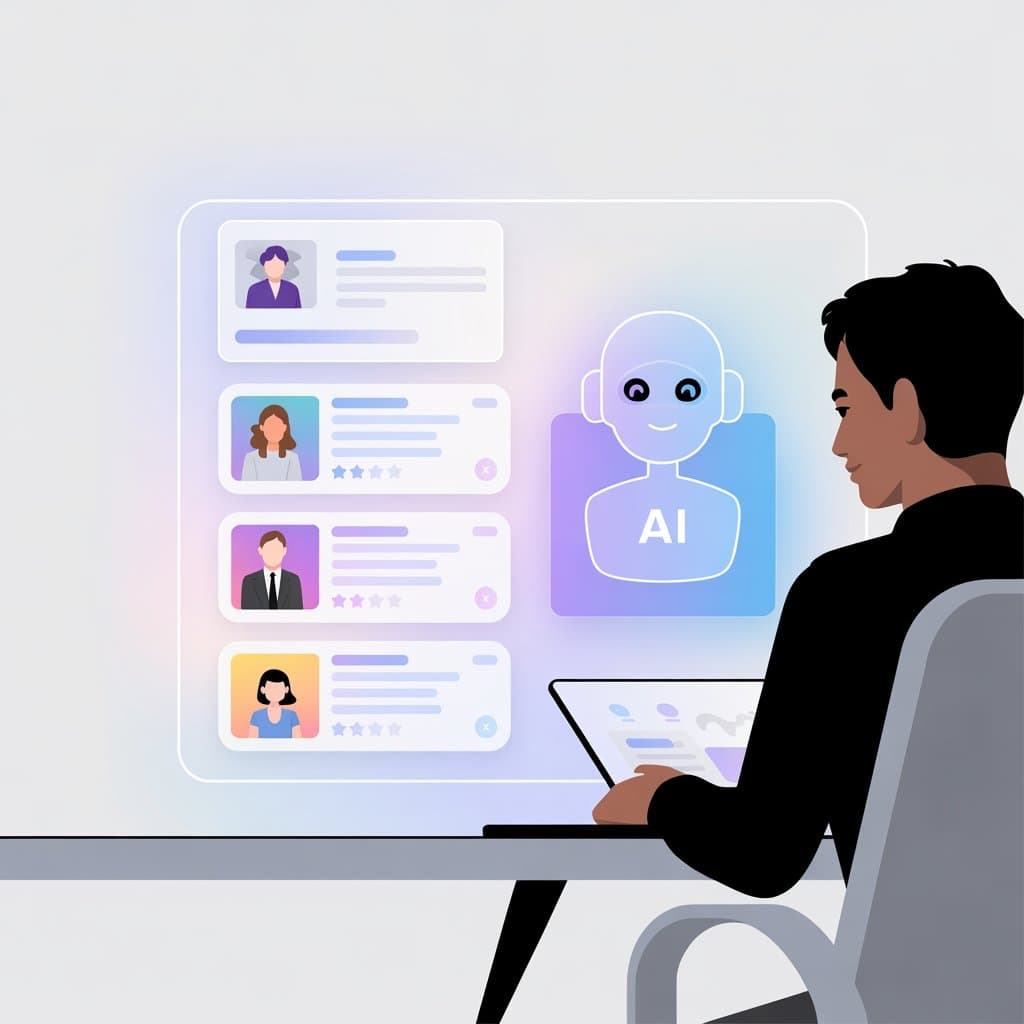
Entity SEO defines your business as a clear, consistent entity that AI systems can unambiguously identify and recommend. AI must answer three questions: What is it? What does it do? Can it be trusted?
Google's Knowledge Graph - which underpins Gemini - is fundamentally an entity database. ChatGPT encodes entity knowledge from millions of web documents.
Entity SEO: 7 Steps
Define your entity precisely
State exact name, category, services, area, founding date on homepage and About page.
Standardise NAP everywhere
Name, address, phone must be identical across website, GBP, Bing, Apple Maps, Yelp, LinkedIn.
Organization schema on every page
JSON-LD with name, url, logo, description, foundingDate, contactPoint, areaServed, sameAs.
Build your sameAs network
List every verified profile in sameAs schema. Cross-references build AI's entity model.
Complete all directory profiles
GBP, Yelp, Apple Maps, industry directories - each is a consistent entity data point.
Build citation breadth
Mentions on local news, publications, review platforms corroborate and strengthen your entity.
Monitor entity knowledge
Query AI systems about your business regularly. Correct errors by improving entity signals.
Section 7
Structured Data for AI
Structured data is JSON-LD markup that explicitly communicates meaning to AI systems - eliminating the need for inference and the risk of misidentification.
Models over-weight pages with consistent, valid schema because they're systematically easier to parse at scale.
Priority Schema Types
Organization
Business identity: name, logo, url, sameAs
CriticalLocalBusiness
Physical address, hours, service area
CriticalService
What services you offer and how to access them
HighFAQPage
Questions and direct answers about your business
HighBreadcrumbList
Site navigation path for each page
Medium-HighArticle
Author, date, headline for editorial content
Medium-HighHowTo
Step-by-step processes you follow or teach
MediumSpeakable
Sections suited for voice/AI extraction
MediumWebSite
Site-level identity with SearchAction
MediumSchema Implementation Principles
Section 8
AI Crawlers Explained
AI crawlers read your web content to build training datasets or retrieval indexes. If robots.txt blocks them, your business is excluded from that platform entirely.
Many sites unintentionally block AI crawlers with wildcard Disallow rules. In 2025, this actively harms your AI visibility.
Major AI Crawlers
GPTBot
OpenAI
ChatGPT training
OAI-SearchBot
OpenAI
ChatGPT Search / Browse
PerplexityBot
Perplexity AI
Perplexity queries
Google-Extended
Gemini, AI Overviews
ClaudeBot
Anthropic
Claude training
Applebot-Extended
Apple
Apple Intelligence, Siri
Bytespider
ByteDance
TikTok AI
CCBot
Common Crawl
Multiple LLM datasets
Meta-ExternalAgent
Meta
Meta AI (Llama)
Correct robots.txt for AI Visibility
User-agent: GPTBot
Allow: /

User-agent: OAI-SearchBot
Allow: /

User-agent: PerplexityBot
Allow: /

User-agent: Google-Extended
Allow: /

User-agent: ClaudeBot
Allow: /

User-agent: Applebot-Extended
Allow: /

User-agent: Meta-ExternalAgent
Allow: /

User-agent: *
Allow: /
Important
If you use a wildcard Disallow: / for any reason, add explicit Allow rules for each AI crawler above that rule - robots.txt is processed in order.
Section 9
GEO Implementation Framework
GEO implementation is a structured sequence across technical infrastructure, entity definition, content, and authority signals. Each step depends on the one before it.
The Implementation Process
Audit your current AI visibility
Query ChatGPT, Perplexity, and Gemini for 'best [your service] in [your city]' and 'what is [business name]?' Document what AI systems currently know, how they describe you, and which competitors appear in answers you should be in.
Fix the technical foundation
Verify your website is indexed in Google Search Console. Confirm your sitemap is submitted and up to date. Enable HTTPS. Check Core Web Vitals. Update robots.txt to explicitly allow GPTBot, PerplexityBot, Google-Extended, ClaudeBot, and other major AI crawlers.
Build your entity definition
Create consistent name, address, phone, and description across your website, Google Business Profile, and all directories. Implement Organization and LocalBusiness JSON-LD schema on your homepage. Add sameAs links to every verified social and directory profile.
Implement priority schema markup
Add FAQPage schema to Q&A content, Service schema to service pages, HowTo schema to process content, BreadcrumbList to all pages, and Speakable schema to key answer blocks. Validate all schema in Google's Rich Results Test before publishing.
Create answer-optimized content
Write comprehensive Q&A content covering every question your customers ask. Each answer should be 40–60 words - factual, direct, and citation-ready. Use question-form H2 headings. Avoid marketing language. AI systems cite factual, neutral, authoritative answers - not sales copy.
Expand your authority and citation footprint
Earn customer reviews, get featured in relevant publications, create profiles on authoritative industry directories. AI systems cross-reference multiple sources - the more credible platforms where your business appears consistently, the higher your recommendation probability becomes across all AI systems.
Priority Matrix
Allow AI crawlers
Organization + LocalBusiness schema
Google Business Profile
FAQPage schema
AEO content blocks
Directory NAP consistency
Speakable schema
Review acquisition
Publication outreach
AI Visibility Checklist
Technical Foundation
Schema Markup
Content for AI
Entity & Authority
Section 10
The Future of Search
Search is moving towards greater AI mediation. Voice, ambient assistants, and agentic AI will handle an increasing share of commercial discovery. The window for establishing visibility is narrowing.
Key Trends: Next Five Years
AI Overviews Becoming Default
Now appearing on ~20% of queries and expanding. Businesses in AI Overviews gain compounding visibility.
Agentic AI Browsing
AI agents that autonomously book, compare, and research need machine-readable, structured, actionable websites.
Voice & Ambient AI
Apple Intelligence, Google Assistant, and Alexa are evolving into context-aware recommendation engines.
Personalised AI Recommendations
Strong entity definitions and broad citation footprints perform better in personalised contexts.
Multimodal Discovery
AI processes images, video, and audio alongside text. Rich multimodal content will create visibility advantages.
The Compounding Advantage
AI visibility compounds like domain authority in traditional SEO. Businesses that establish entity signals, schema, and citation breadth today gain a structural advantage competitors can't quickly replicate. Every month of delay is compounding advantage forfeited.
Frequently Asked Questions
Common questions about AI visibility, GEO, and the future of search.
Need a visibility audit?
Get a free SEO + GEO visibility audit and see where you stand across every AI platform.
Free AuditThe YOOM Digital Agency team specialises in AI-era search visibility - SEO, Answer Engine Optimization, and Generative Engine Optimization - for small and medium businesses. All content is researched, written, and reviewed by practitioners with active client experience in digital visibility strategy.
The way customers find
businesses is changing.
YOOM Digital Agency combines SEO, AEO, and GEO into one coherent strategy. Every section of this guide represents a discipline we implement. Start with a free visibility audit.
The difference
Why Yoom
Most agencies still focus on websites and traditional SEO. YOOM Digital Agency is built for what's next.
Built for AI search from day one
Most agencies built their practice on traditional rankings and retrofitted AI as an add-on. We started with the question: how do AI systems discover and recommend businesses?
We test what we teach
Every framework we apply has been tested on real deployments. We submit queries to ChatGPT, Gemini, and Perplexity, track which sources are cited, and reverse-engineer the patterns.
We explain the work
We publish the methodology behind every engagement. Our guides on GEO, AEO, and schema are available for anyone - because visibility should be accessible, not locked behind jargon.
Strategy, not just execution
We advise on content architecture, entity positioning, and AI citation strategy with the same depth as an in-house strategist - at a fraction of the cost.