monthly users of Google AI Overviews
AI Overviews now reach more than 2 billion monthly users across 200+ countries and territories.
Google / Alphabet earnings, July 2025
The Future of Search
Fewer search results. More AI summaries. How discovery is changing - and how to stay visible.
40%
of searches trigger AI answers
65%
trust AI recommendations
3.0x
more visibility with GEO + SEO
90%
lack AI optimization
When to read this
This page is worth your time if any of these describe your situation right now.
Five reference points that anchor every AI-visibility decision we help clients make. Official adoption figures sit alongside independent research so you can see both the scale and the direction.
monthly users of Google AI Overviews
AI Overviews now reach more than 2 billion monthly users across 200+ countries and territories.
weekly active users on ChatGPT
ChatGPT now serves more than 800 million users every week — the largest consumer AI surface in history.
predicted decline in traditional search volume
Gartner predicts traditional search engine volume will drop 25% by 2026 as users shift to AI chatbots and virtual agents.
of tracked queries now trigger AI Overviews
BrightEdge reports that AI Overviews now appear on nearly half of tracked queries — and the share keeps climbing.
Based on BrightEdge's tracked-query sample, not all Google searches.
year-over-year growth in AI-sourced website traffic
Independent analysis reported that AI-driven website sessions surged 527% year over year as users started using ChatGPT, Perplexity, and Gemini as primary discovery surfaces.
Based on a multi-site sample by Previsible reported in Search Engine Land — directional, not universal.
Some market stats vary by methodology, query set, and sample size. Official platform adoption figures and independent research are shown together to illustrate the broader shift in search behaviour.
For decades, search meant typing a query, scanning search results, and clicking through. Visibility was about ranking on page one.
Businesses that aren't prepared for this shift will be invisible where it matters most: inside the answer.
10 blue links. Click, scan, compare.
One AI answer. AI decides for you.
Not in the answer? You don't exist.
Today, more people ask full questions. AI tools summarize answers. Fewer search results get clicked. Discovery is becoming conversational.
Old model
New model (AI discovery)
Betterhas a question
ChatGPT, Perplexity, etc.
one answer
businesses in the answer
If you're not in the AI answer, you effectively don't exist.
Output
Ranked list of 10 links
User action
Scan, click, compare
How you win
Rank #1 on page one
Signals
Backlinks, keywords, speed
Platforms
Google, Bing
Output
Single synthesized answer
User action
AI reads, decides for you
How you win
Be cited in the answer
Signals
Entity, schema, authority
Platforms
ChatGPT, Perplexity, Gemini
AI doesn't rank links - it reads, understands, and generates answers.
AI systems crawl the web and index structured content. Your site, schema, and citations form your digital footprint.
AI interprets user intent and matches it to entities and content that answer the question directly.
The AI generates a synthesized answer and cites the most relevant, authoritative sources.
AI Recommendations
AI systems evaluate four core signals to decide which businesses to cite and recommend in their generated answers.
Get Your AI Visibility AuditYour business is clearly defined across the web - consistent name, category, and location.
Your site directly answers the questions your customers ask - with clarity and depth.
Your business appears across trusted platforms, directories, and review sites.
Structured data tells AI exactly who you are, what you offer, and where you operate.
Three layers of visibility
Each layer builds on the next. Together, they cover every way customers discover you.
Rank in traditional search results when customers look for what you offer.
Appear in featured snippets, knowledge panels, and direct answers.
Get recommended by ChatGPT, Gemini, Perplexity, and other AI platforms.
What matters in AI search
AI search doesn't use traditional ranking factors. These are the signals that determine whether your business gets recommended.
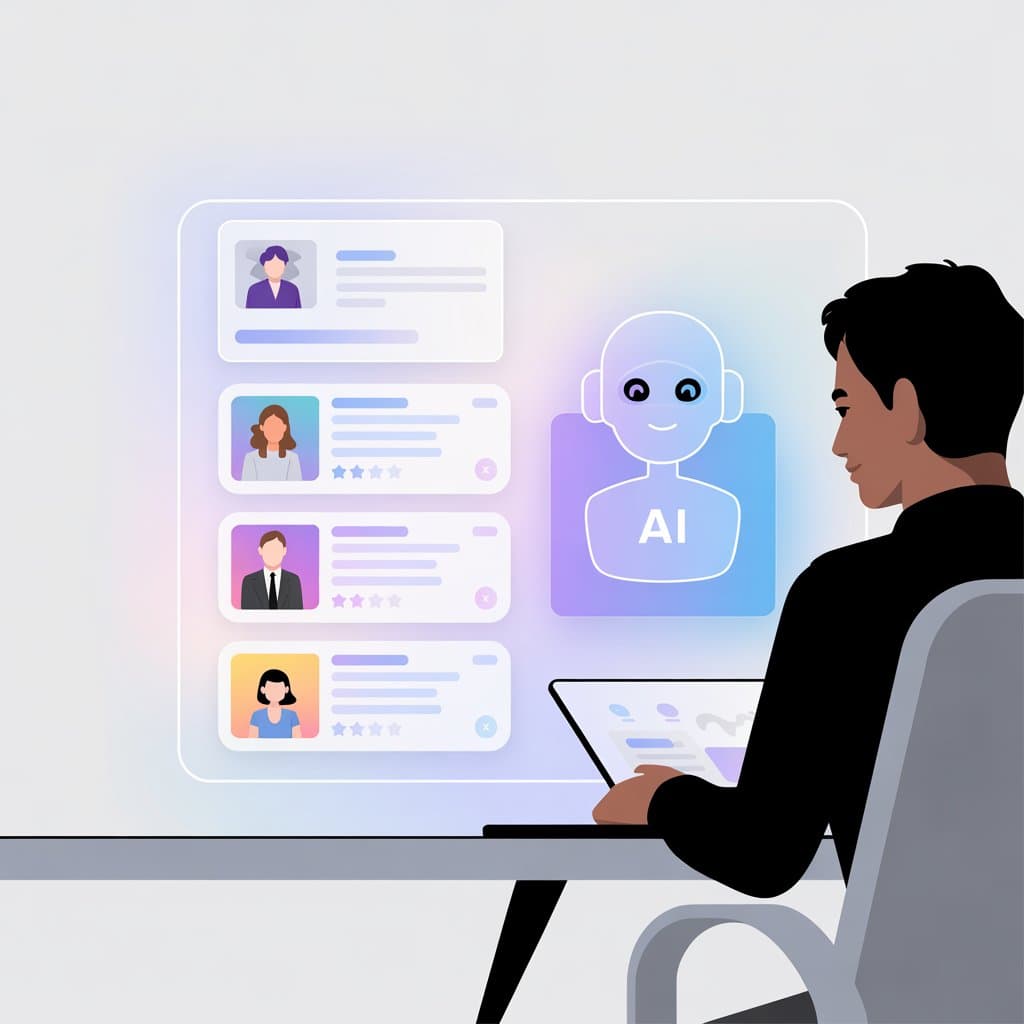
Schema & structured data
Schema markup tells AI exactly what your business is, what you offer, and how to categorize you - without guessing from page content.
Organization
LocalBusiness
Service
FAQPage
Article
HowTo
Common questions about AI search, GEO, and how businesses get recommended.
Find out how visible your business is to AI - and what it takes to start showing up.
Prepare for the ShiftThe difference
Most agencies still focus on websites and traditional SEO. YOOM Digital Agency is built for what's next.
Most agencies built their practice on traditional rankings and retrofitted AI as an add-on. We started with the question: how do AI systems discover and recommend businesses?
Every framework we apply has been tested on real deployments. We submit queries to ChatGPT, Gemini, and Perplexity, track which sources are cited, and reverse-engineer the patterns.
We publish the methodology behind every engagement. Our guides on GEO, AEO, and schema are available for anyone - because visibility should be accessible, not locked behind jargon.
We advise on content architecture, entity positioning, and AI citation strategy with the same depth as an in-house strategist - at a fraction of the cost.